

When Election Neutrality Becomes a Question of Trust
A.M.M. Nasir Uddin
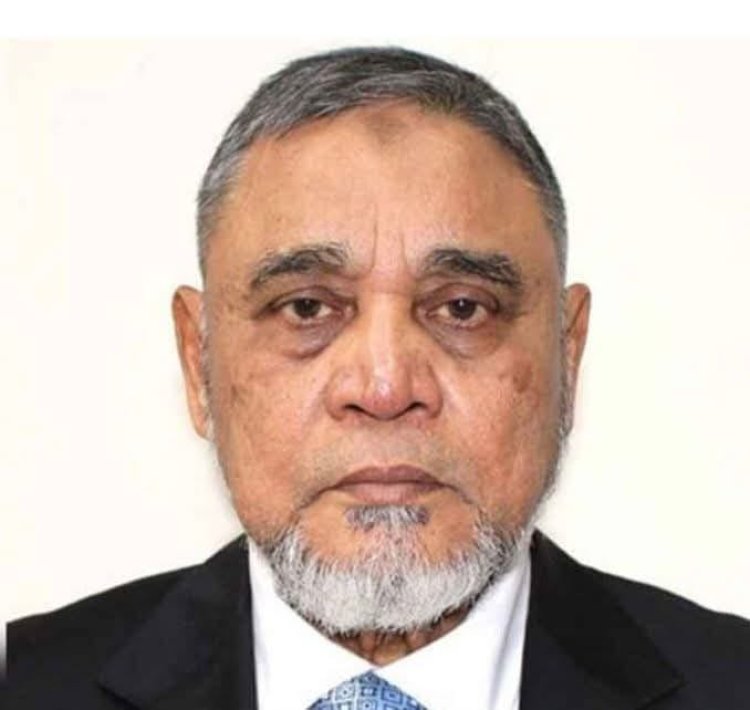
When Election Neutrality Becomes a Question of Trust
Public confidence in an election commission is rarely lost overnight. It erodes slowly—through patterns that feel small in isolation but heavy in accumulation: appointments that appear politically convenient, decisions that seem unevenly enforced, and a tone from the top that doesn’t reassure a divided electorate.
In any democracy, the Chief Election Commissioner is more than an administrator. The office symbolises the promise that competition will be fair, that rules will be applied consistently, and that losing parties will still accept the outcome because the process is credible. When citizens begin to doubt that promise, the damage is bigger than one election cycle—it becomes an institutional wound.
In an election, the most powerful institution is not the party office, the campaign stage, or the media studio—it is the election authority that guarantees the rules apply equally to all. That is why the Chief Election Commissioner carries a burden bigger than administration: the burden of trust.
Today, growing sections of the public and political observers are questioning whether Chief Election Commissioner A.M.M. Nasir Uddin is able to project the kind of visible neutrality that a divided political environment demands. These concerns are not simply about one decision or one headline. They are about confidence—and confidence is built from patterns.
The burden of the chair: perception is part of the job
Even if an official believes they are acting impartially, perception matters. A commission does not operate in a vacuum; it operates in a political climate where every action is interpreted through history, alliance, and suspicion. That means the CEC’s role demands not only neutrality, but visible neutrality.
This is why past election leadership is often remembered less for speeches and more for how they handled pressure: whether they pushed back against power, whether they protected the system when it was unpopular to do so, and whether they placed electoral integrity above personal reputation.
In Bangladesh’s electoral history, some former commissioners are frequently cited as benchmarks by those who want a strong commission—figures who, rightly or wrongly, became associated with the idea that an election authority can act with firmness under strain. When a new commission takes office, many voters hope for that same “historic” imprint: courage, clarity, and consistency.
The deeper issue: our political ecosystem rewards loyalty over independence
The bigger problem isn’t only one individual. It’s the appointment culture that too often blurs the line between the state and the party.
In South Asian politics, the civil service has long been treated—by multiple governments—as an ecosystem of promotion, placement, and access. That reality creates a recurring public concern: that senior bureaucrats and institutions can become “close to power” over time, whether through professional proximity, patronage networks, or expectations of future roles.
When that happens, elections become vulnerable in a very specific way. The commission may still follow procedures, but citizens start asking:
Were these decisions made to enforce the rules—or to manage the outcome?
Are parties treated equally—or differently?
Is the referee independent—or part of the match?
Once those questions take hold, every administrative move becomes political theatre.
Alliance politics: when seats become negotiations, not representation
Your example touches another important point: the distortion caused by alliance-based electoral bargaining.
In alliance elections, constituencies can become negotiation tokens. Parties trade seats to maintain coalitions, and local representation is shaped as much by central strategy as by voter preference. For citizens, this can feel like a quiet cancellation of choice: not because voting is removed, but because candidacy itself is predetermined through deals.
This matters because alliance politics often fuels the perception that:
politics is an elite arrangement rather than a public mandate,
party symbols become brand tools, not ideological commitments,
and institutions (including election administration) become pressured to serve coalition stability rather than electoral fairness.
What an election commission must do to rebuild credibility
If the commission wants to be believed—especially in a polarised environment—there are practical steps that are more persuasive than speeches:
Radical transparency
Publish decisions, meeting summaries, enforcement rationales, and timelines clearly and promptly.
Equal enforcement
Apply campaign rules consistently across parties, candidates, and allied groups—without selective urgency.
Open engagement
Hold structured consultations with all major parties and credible civil society observers, and disclose outcomes.
Independent audits
Invite credible third-party evaluation of voter lists, polling processes, and result transmission systems.
Public accountability
Acknowledge mistakes, correct them publicly, and explain corrective measures—quickly.
The point is not to insult—it's to protect the system
This is not about demonising individuals. It’s about recognising that elections cannot survive on procedure alone. They survive on trust—and trust requires institutional behaviour that is beyond suspicion.
A CEC does not get the luxury of being “probably neutral”. The job requires being demonstrably neutral, especially when the political environment is combustible. Otherwise, the commission risks becoming another casualty of partisan history—remembered not for strengthening democracy, but for deepening doubt.
Because when citizens stop believing in the referee, they eventually stop believing in the game.